
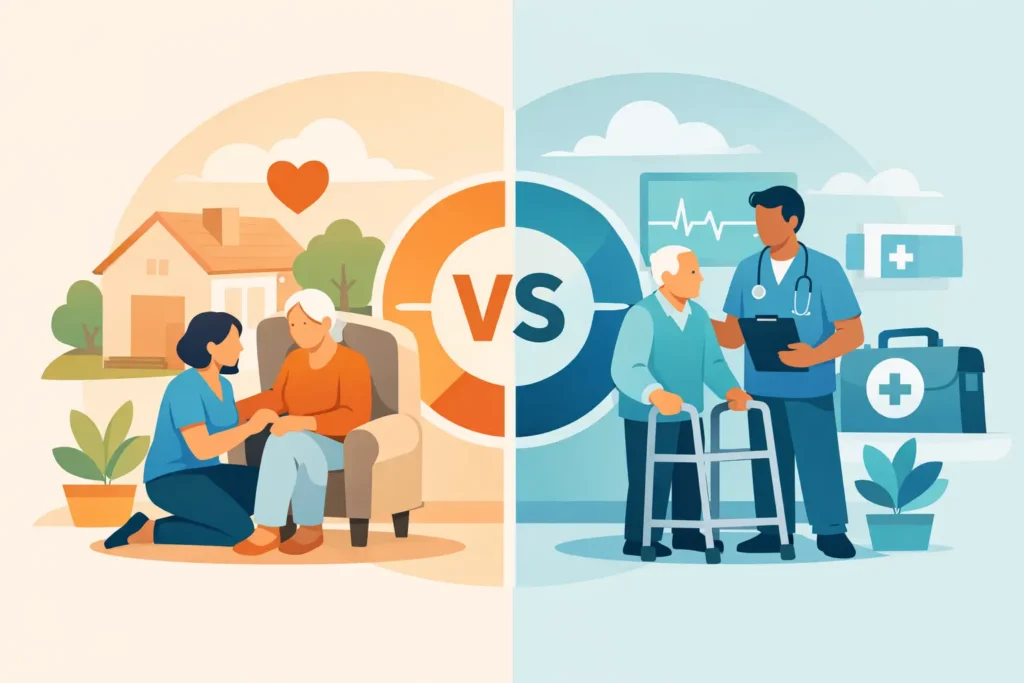
When a parent comes home from the hospital, the question usually sounds simple: what kind of help do they need now? But the answer often is not simple at all. If you have been comparing home care vs home health, you are probably trying to protect someone you love while also making sense of terms that sound similar but mean very different things.
You are in the right place. The clearest way to understand the difference is this: home care helps with daily living, while home health provides skilled medical care at home under a physician’s direction. Both can be valuable. Some families need one or the other. Many need both.
Home care vs home health: the basic difference
Home care is non-medical support. It is designed to help someone stay safe, comfortable, and independent at home when everyday tasks have become harder. That might mean help with bathing, dressing, meal preparation, light housekeeping, transportation, or companionship. Home care can also give family caregivers a much-needed break.
Home health is clinical care. It is typically ordered by a physician for someone recovering from illness, surgery, injury, or a health setback that requires skilled services at home. Home health may include nursing, physical therapy, occupational therapy, speech therapy, and medical social services. The goal is often to treat, monitor, and help the patient recover or stabilize.
This distinction matters because families often call asking for one thing when they really need the other. A loved one may need wound care and medication teaching, which points to home health. They may also need help getting to the bathroom safely, eating regular meals, and not being alone all day, which points to home care.
What home care helps with
Home care is often the right fit when a person does not need medical treatment at home but does need hands-on support or supervision. This is common for older adults who want to age in place, people living with dementia, adults with disabilities, and family caregivers who are stretched thin.
A caregiver can assist with personal care tasks such as bathing, grooming, toileting, and getting dressed. They can also help with homemaker support like laundry, meal prep, errands, and keeping the home safer and more manageable. Just as important, home care can reduce isolation. For many seniors, regular companionship is not an extra. It is part of staying emotionally well.
Home care is usually flexible. Some families need a few hours a week. Others need daily support, overnight help, or more consistent coverage after a hospitalization. Because it is not tied to a doctor’s order in the same way home health is, it can often continue long term if needed.
What home health includes
Home health is for patients who need skilled care from licensed clinicians. A nurse may monitor vital signs, manage medications, provide wound care, or educate the patient and family about a diagnosis. Therapists may work on walking safely after surgery, rebuilding strength after illness, or improving the ability to perform daily tasks.
Home health is usually episodic, meaning it is tied to a medical need and a specific period of treatment. A patient might receive visits for several weeks after a joint replacement, hospitalization, or worsening chronic condition. The care plan is based on physician orders and clinical goals.
This is one reason families can be surprised by what home health does not cover. A nurse may come for a skilled visit, but that does not mean someone will stay for several hours to help with meals, housekeeping, or supervision. Home health is essential medical support, but it is not a substitute for ongoing non-medical caregiving.
When families actually need both
This is where the real-world picture gets clearer. Recovery and independence do not happen in separate boxes. A person may need skilled nursing for a surgical incision and physical therapy to regain mobility, while also needing help showering safely, remembering meals, and getting to follow-up appointments.
That is why home care vs home health is not always an either-or decision. It is often a coordination decision.
For example, imagine an older adult in Reno returning home after pneumonia. Home health may address medication education, breathing status, and strength training through therapy. But if that person is weak, tired, and at risk of falling, home care may be what makes the plan workable day to day. The medical piece helps recovery. The personal support helps them live through recovery safely.
The same is true for chronic illness. Someone with heart failure, Parkinson’s disease, or diabetes may benefit from intermittent clinical oversight while also needing practical help that supports routines, nutrition, and energy conservation. When those services work together, families often feel less overwhelmed and patients are better supported as whole people, not just diagnoses.
How to know which one your loved one needs
Start with the question that matters most: is there a skilled medical need at home? If the person needs nursing care, therapy, medication management teaching, wound care, or monitoring directed by a physician, home health should be part of the conversation.
If the bigger concern is daily functioning, home safety, hygiene, meal preparation, transportation, memory support, or caregiver relief, home care is likely the better fit.
Sometimes the signs are mixed. A loved one may say they are fine because they can still make coffee and watch television, but you notice unopened medications, weight loss, missed appointments, or trouble getting in and out of bed. In those moments, families do not just need a service. They need guidance.
That is where a more coordinated model can make a real difference. Instead of forcing families to juggle separate agencies, discharge instructions, and conflicting advice, an integrated team can help determine what support belongs where and how those pieces should work together.
Questions worth asking before care starts
Before choosing a provider, ask how care plans are built and who oversees them. With home health, you should understand what skilled services are being ordered, how often visits will happen, and what goals the clinical team is tracking. With home care, ask what type of assistance caregivers can provide, how schedules are handled, and how changes in condition are communicated.
It also helps to ask what happens if the patient’s needs change. This is one of the biggest pain points for families. Someone starts with a simple recovery plan, then progress slows, new symptoms appear, or caregiver burnout sets in. If services are fragmented, the burden of connecting those dots often falls on the family.
A physician-led, multidisciplinary approach can ease that pressure. Comprehensive Home Health Solutions was built around that idea: medical care, personal support, and advocacy work better when they are coordinated instead of siloed. For families in Northern Nevada, that can mean fewer gaps, clearer communication, and a plan that actually reflects real life at home.
The financial and practical side
Families also ask about cost and coverage, and rightly so. Home health is often covered when a patient meets medical criteria and services are ordered appropriately. Home care, because it is non-medical and often ongoing, is more commonly private pay or funded through other long-term support options depending on the situation.
That does not mean one is more valuable than the other. It means they serve different purposes. A covered nurse visit may be crucial for recovery, but it will not replace four hours of hands-on assistance for someone who cannot bathe safely alone. The right choice is not always the lower-cost option up front. It is the option that best matches the person’s risks, needs, and daily reality.
If you are unsure, pay attention to what is happening between medical appointments. That is often where the answer lives. Are there falls, missed meals, confusion, loneliness, exhaustion, or a spouse quietly doing too much? Those are not small details. They are often the reasons a person struggles at home even when medical treatment is technically in place.
The best care plan is the one that sees the full picture. If you are weighing home care vs home health, you do not need to figure it all out alone. Start with what your loved one is facing today, ask for help sorting the medical needs from the daily living needs, and build from there. When care fits the person, home can feel safer, calmer, and far more manageable for everyone involved.