
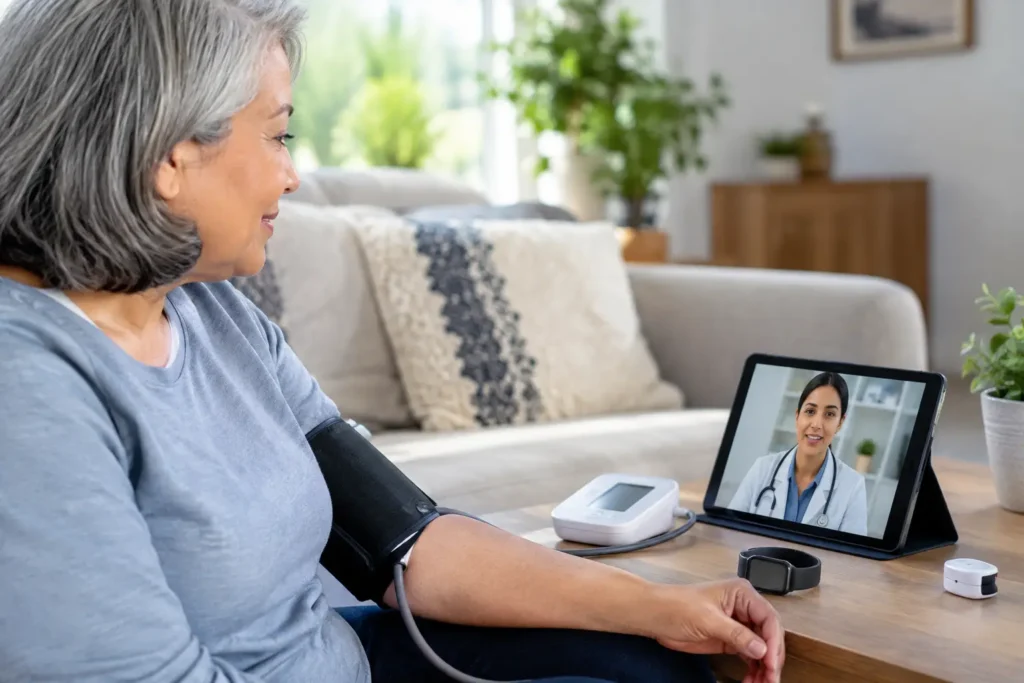
A blood pressure reading taken at home can tell a care team something meaningful. But it cannot, by itself, explain why a loved one is suddenly more tired, skipping meals, confused about medications, or struggling to get safely to the bathroom. That distinction matters as remote patient monitoring trends bring more health technology into the home.
For families arranging care in Northern Nevada, remote monitoring can be reassuring when it is part of a thoughtful care plan. It can help identify concerning changes sooner and give clinicians a clearer picture between visits. It works best, however, when real people are prepared to interpret the information, contact the patient, and coordinate the next step.
What Remote Patient Monitoring Actually Means
Remote patient monitoring, often called RPM, uses connected devices to collect health information while a person remains at home. Depending on a physician’s plan and the patient’s condition, this may include blood pressure, weight, blood sugar, oxygen level, heart rate, or other measurements. The device transmits readings to a clinical team for review.
This is different from a wearable that simply displays a number to the person wearing it. A consumer device can support awareness, but clinical monitoring involves an established process: who is reviewing information, what readings require follow-up, how quickly the team responds, and which provider can make treatment decisions.
For someone living with heart failure, for example, an unexpected increase in daily weight may signal fluid retention before shortness of breath becomes severe. For a patient recovering from pneumonia, oxygen readings and symptoms may help guide a timely call to the physician. The goal is not to turn a home into a hospital. It is to catch meaningful changes while there is still time to respond calmly and appropriately.
Remote Patient Monitoring Trends Point to Earlier Action
The most useful shift is away from collecting large amounts of data for its own sake. Care teams are increasingly focused on actionable monitoring: selecting a few measures that relate directly to a patient’s diagnosis, medications, recent hospitalization, and personal goals.
That is a better fit for families, too. An older adult managing diabetes, high blood pressure, and mobility challenges may not benefit from a drawer full of devices. They may benefit from one simple device, clear instructions, and a nurse who notices when readings suggest a pattern worth addressing.
This approach is especially valuable after a hospital stay. The first days and weeks at home can be fragile. Medication changes, a new diet, fatigue, pain, and follow-up appointments can quickly overwhelm a patient and family caregiver. Monitoring can add a layer of clinical awareness during that transition, but it should sit alongside medication support, skilled nursing when ordered, therapy, transportation planning, and help with daily routines.
More monitoring is moving beyond vital signs
Vital signs remain central, but they are not the whole story. Care teams are paying closer attention to symptoms and functional changes that often predict trouble at home. A patient may report increased swelling, dizziness, poor sleep, pain, or a new inability to prepare meals. A family caregiver may notice that their loved one is less steady or no longer answering the phone.
These observations are sometimes more revealing than a single normal reading. That is why communication between the patient, family, caregivers, nurses, therapists, physicians, and advocates remains essential. Technology can create a useful signal. A coordinated team provides the context.
Simpler devices are becoming more important
The best device is not always the newest one. It is the one a patient can use consistently and correctly. Large displays, straightforward setup, minimal charging, and clear written instructions can make a genuine difference for seniors and people managing vision, hearing, memory, or dexterity changes.
Some programs can transmit readings through cellular service rather than requiring home Wi-Fi. This may help in rural areas or in homes where internet access is unreliable. Still, families should ask practical questions before enrolling: Who sets up the equipment? What happens if it stops working? Can the patient use it independently? Is a caregiver expected to help every day?
The Human Side of the Data Matters Most
A concerning reading does not always mean an emergency, and a normal reading does not always mean everything is fine. Clinical judgment matters. A nurse may need to ask whether a blood pressure measurement was taken after medication, whether the cuff fit properly, whether the patient feels lightheaded, or whether there has been a recent change in fluid intake.
Families should also understand the response plan. Some monitoring programs review data during standard business hours, while others have different coverage arrangements. An alert may trigger a phone call, a recommendation to contact the physician, a nursing visit, or emergency guidance, depending on the situation. Remote monitoring is not a replacement for calling 911 when someone has signs of a medical emergency, such as severe chest pain, sudden weakness on one side, serious trouble breathing, or loss of consciousness.
For many families, the relief comes not from watching numbers themselves but from knowing that they are not managing every concern alone. A clinician who listens to the full picture can help determine whether a change calls for rest and observation, a same-day provider call, a medication discussion, or more immediate care.
Privacy, Cost, and Access Deserve Straight Answers
Health technology should make care more understandable, not create another source of confusion. Before beginning a remote monitoring program, ask how health information is protected, who can see the data, and how long it is retained. It is also reasonable to ask whether the device is supplied by the program, whether there are out-of-pocket costs, and whether insurance coverage applies to the specific diagnosis and service.
Coverage and eligibility can vary. Medicare, Medicare Advantage plans, Medicaid programs, and private insurance may follow different rules, and physician involvement is often required. A trusted care coordinator or patient advocate can help families sort through those questions without assuming that every program fits every person.
Access is another consideration. Monitoring can be helpful for people who live farther from medical offices or have difficulty with transportation, but only when the program accounts for language needs, technology comfort, caregiver availability, and reliable communication. A plan that works beautifully for one household may be frustrating or unrealistic for another.
When Remote Monitoring May Be a Good Fit
Remote patient monitoring may be worth discussing with a physician when a loved one has a chronic condition that requires closer observation, has recently returned home from the hospital, experiences frequent changes in symptoms, or needs more support following a medication adjustment. It can be particularly useful for conditions such as heart failure, COPD, hypertension, diabetes, and certain post-surgical recoveries.
It may be less helpful when using devices causes anxiety, the patient cannot participate safely even with assistance, or there is no clear clinical plan for the information collected. In those situations, more hands-on home support, regular skilled visits, or stronger care coordination may be the better starting point.
At Comprehensive Home Health Solutions, we look at the whole person before recommending a path forward. Medical needs, daily function, family capacity, home safety, emotional well-being, and access to providers all belong in the conversation. A monitoring device can be a valuable tool, but it is only one part of the support that helps someone remain safe and independent at home.
Questions Families Can Ask Before Starting
A brief conversation with the physician or care team can clarify whether monitoring will truly help. Ask which readings will be tracked, how often they should be taken, and what specific changes should prompt a call. Ask who reviews the data, when they review it, and what happens after an alert.
It is also wise to ask how the monitoring plan connects with the rest of care. Will the primary care provider receive updates? Will a home health nurse or therapist have access to relevant information? Who helps if the patient is unable to take a measurement or begins showing changes that the device cannot capture?
The right answer is not always more technology. It is the level of support that gives your loved one a safer, steadier path at home – and gives your family a clear person to call when something changes.