
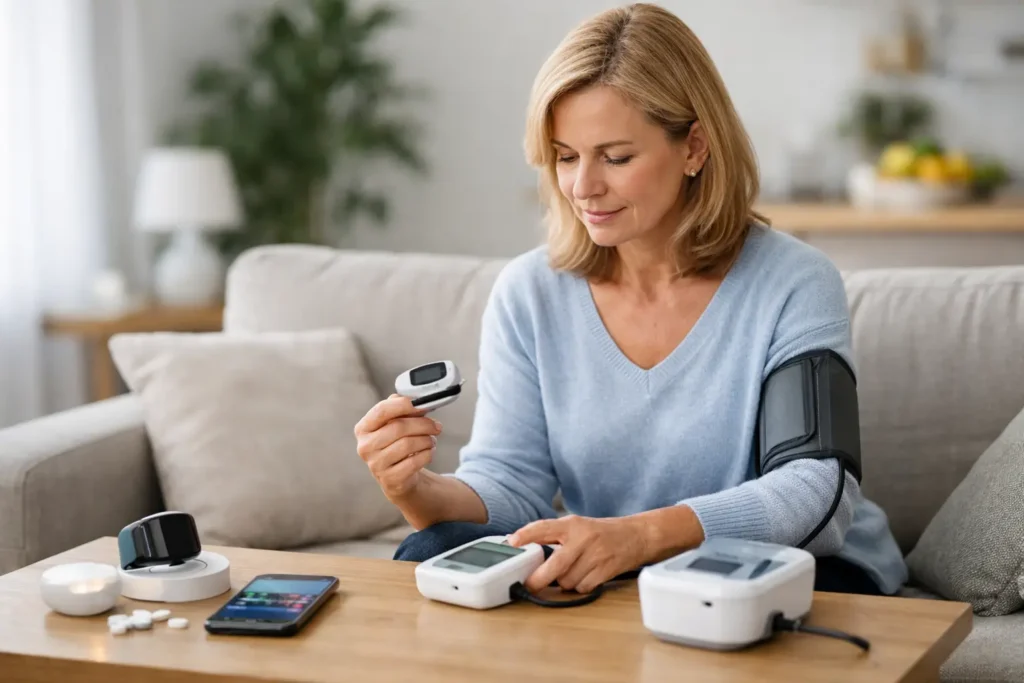
A difficult day is not always a medical emergency. But when your father with heart failure suddenly needs three pillows to sleep, or your spouse with COPD is too tired to walk from the bedroom to the kitchen, those changes deserve attention. Learning how to monitor chronic symptoms gives families a clearer picture of what is normal, what is changing, and when to bring in clinical support.
The goal is not to turn family caregivers into nurses or ask a loved one to focus on every ache and worry. It is to notice meaningful patterns early, communicate them clearly, and help the care team respond before a manageable concern becomes a crisis.
Start with your loved one’s personal baseline
Chronic conditions do not look the same from one person to another. A person living with arthritis may have some daily pain but still get dressed independently. Someone with dementia may have occasional confusion in the evening but be alert and engaged most mornings. Their baseline is the usual pattern that allows you to recognize a true departure from it.
For a few days, observe how your loved one typically feels and functions. Pay attention to energy level, appetite, sleep, mobility, mood, memory, breathing, bowel and bladder habits, and the help they need with everyday tasks. If they use medical equipment or have physician instructions for tracking blood pressure, blood sugar, oxygen levels, weight, or other measurements, record those as directed.
A baseline also includes what a good day and a hard day look like. Chronic illness can fluctuate. One tired afternoon after a busy family visit may not be alarming. Several days of worsening fatigue, missed meals, or reduced activity may be a different story.
How to monitor chronic symptoms without becoming overwhelmed
A simple, consistent routine is more useful than checking everything repeatedly. Choose one time each day, such as breakfast or the evening medication routine, to ask a few calm questions and make observations. If your loved one is able, involve them in deciding what they want tracked. Maintaining their voice and independence matters.
Keep the record in one place: a paper notebook, calendar, or a shared note that family members can access. Write down the date, the symptom, how severe it was, what may have triggered it, and what helped. Specific observations are more useful than general statements. “More short of breath when walking to the mailbox, began Tuesday, improved after resting” gives a clinician far more to work with than “breathing seems worse.”
You do not need a long checklist for every condition. Focus on the symptoms most relevant to the diagnosis and the concerns the physician has discussed. For many families, the most helpful areas to watch include:
- Changes in breathing, coughing, chest discomfort, swelling, or unexpected weight change
- Shifts in pain, weakness, balance, mobility, or ability to complete personal care
- Changes in appetite, hydration, nausea, bowel habits, urination, or skin condition
- New confusion, anxiety, low mood, agitation, sleep changes, or social withdrawal
- Medication side effects, missed doses, trouble swallowing pills, or difficulty obtaining refills
The purpose of tracking is not to diagnose the cause yourself. It is to give the care team timely, accurate information.
Measure only what the care plan calls for
Numbers can be valuable, especially for conditions such as diabetes, heart failure, hypertension, and COPD. They can also create unnecessary anxiety when taken without context. Follow the measurement schedule and thresholds provided by the physician or home health clinician rather than checking more often just for reassurance.
For example, a daily weight may help identify fluid retention in a person with heart failure. Blood glucose readings can show whether diabetes management needs adjustment. Oxygen readings may matter for some people with lung disease, but a pulse oximeter reading alone does not tell the whole story. Look at the person, too: Are they struggling to breathe, unusually drowsy, pale, or unable to speak comfortably?
If a reading seems unexpected, check that the device is working correctly and repeat it according to the care plan. Then report concerning patterns instead of changing medications or oxygen settings on your own unless the physician has given explicit instructions.
Notice changes in function, not only medical symptoms
Families often recognize decline first in ordinary moments. Your loved one may stop preparing a familiar breakfast, wear the same clothes for several days, hesitate on the stairs, or no longer answer the phone. These can be signs of pain, weakness, medication effects, depression, cognitive change, poor nutrition, or a new medical problem.
Functional changes deserve the same attention as a number on a monitor. Ask practical questions: Can they bathe safely? Are they eating and drinking enough? Have they fallen or nearly fallen? Are they taking medications as prescribed? Are they leaving the home less often because getting out has become difficult?
This is where coordinated support can make a real difference. Personal care and homemaker assistance may reduce risks when daily tasks become harder. Skilled nursing, therapy, and medical social services can help identify why a change is happening and what support will help the person remain safe at home.
Know when to call the care team
Call the physician, nurse, or home health team when there is a new symptom, a clear worsening trend, or a change that affects daily function. Do not wait for the next scheduled appointment if your loved one’s usual pattern has shifted for more than a day or two, or sooner if the change is significant.
Bring the symptom record to appointments or have it available during a phone call. Include when the problem started, whether it is getting better or worse, recent measurements if relevant, current medications, and any recent illness, fall, hospitalization, or treatment change. This helps the clinician make a safer decision without relying on memory during a stressful moment.
Some symptoms require urgent action. Call 911 for severe trouble breathing, chest pain or pressure, signs of stroke such as facial drooping or sudden speech difficulty, fainting, uncontrolled bleeding, a serious fall injury, or sudden confusion that is severe or rapidly worsening. If you are unsure whether a situation is an emergency, it is safer to seek immediate guidance.
Build a communication plan before a problem arises
Chronic symptom monitoring works best when everyone knows their role. Identify the primary family contact, the preferred pharmacy, current providers, medication list, and the best number to call after hours. Keep this information where caregivers can find it quickly.
It also helps to discuss your loved one’s preferences early. Some people want every symptom reported immediately; others want to be consulted before an adult child contacts the provider. Respecting those preferences, while acting promptly when safety is at stake, protects dignity and reduces family conflict.
For families coordinating care from a distance or balancing work and caregiving, a shared daily update can prevent missed details and duplicate calls. Keep the tone factual and brief. “Ate half of lunch, walked with the walker, mild ankle swelling, no shortness of breath at rest” is enough to keep everyone informed.
When home support adds another layer of safety
Monitoring symptoms alone can feel like a full-time responsibility, particularly after a hospitalization or when several conditions overlap. A trained care team can provide regular observations, medication support within the appropriate scope of care, skilled assessments, therapy, and communication with physicians. Just as valuable, they can help families distinguish between a temporary off day and a change that needs medical follow-up.
Comprehensive Home Health Solutions brings non-medical home care, physician-directed home health, and patient advocacy together so Northern Nevada families do not have to coordinate every moving part alone. Care plans can be adjusted as needs change, whether a loved one needs companionship and meal support, skilled nursing oversight, rehabilitation therapy, or help navigating appointments and treatment decisions.
The most useful symptom log is the one you can maintain with confidence. Start small, stay consistent, and trust yourself to speak up when something no longer feels like your loved one’s normal. That early call can protect comfort, independence, and precious time at home.