
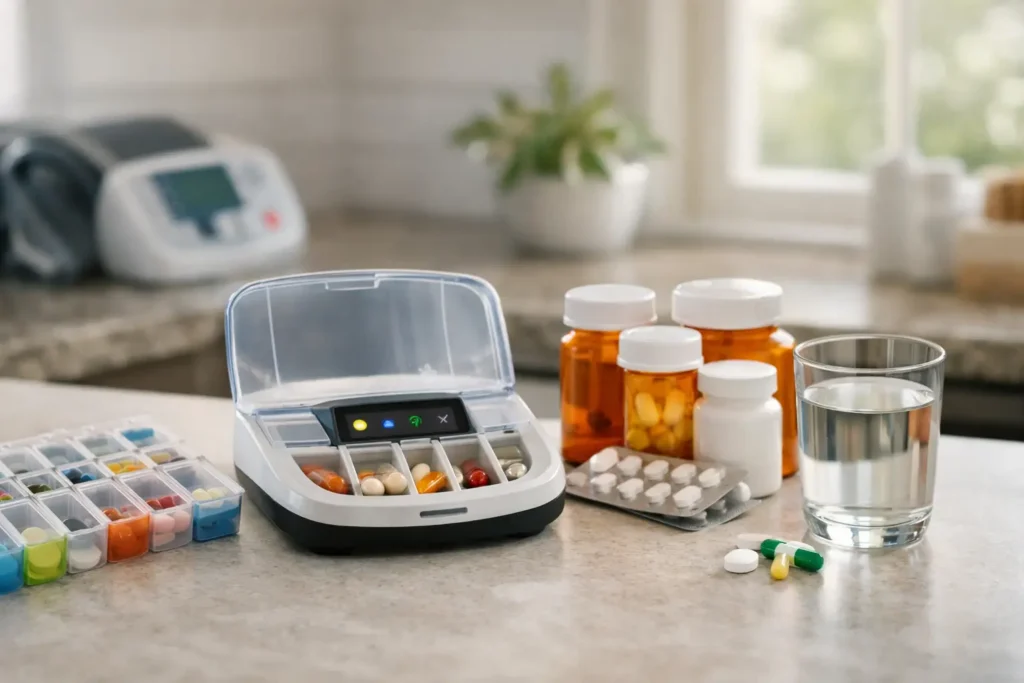
A pillbox on the kitchen counter can look simple. But when a loved one takes several prescriptions, vitamins, over-the-counter medicines, or medications that have recently changed after a hospital stay, that small box can carry real risk. Medication management at home is about more than remembering a morning dose. It is a practical safety plan that helps a person take the right medication, at the right time, in the right way, while protecting the independence they value.
For families, the warning signs often begin quietly: an unopened prescription bottle, duplicate medications in different rooms, a missed refill, or a parent who is suddenly unsure what a pill is for. You do not have to sort out every concern alone. A clear system, paired with the right level of support, can make daily care feel much more manageable.
Why medication mistakes happen at home
Medication errors are rarely the result of a loved one being careless. More often, the routine has become too complicated. Someone may be managing prescriptions from several specialists, coping with vision changes, arthritis, memory loss, fatigue, or the aftereffects of an illness. A new medication may replace an old one, yet both bottles remain in the cabinet. Instructions may be difficult to read, or a dose may need to be taken with food, before a meal, or at a specific time of day.
Transitions in care are especially vulnerable moments. After a hospitalization, surgery, or emergency room visit, families may receive an updated medication list that does not match what is already at home. The patient may feel relieved to be home and eager to resume normal life, while their spouse or adult child is trying to make sense of unfamiliar instructions.
The consequences can range from reduced symptom control to falls, dehydration, dangerous interactions, and avoidable readmission. That is why a medication routine should be treated as part of the care plan, not as an afterthought.
Start medication management at home with one accurate list
The first step is not buying an organizer. It is creating one reliable medication list. Gather every prescription, over-the-counter medicine, vitamin, supplement, eye drop, inhaler, cream, and as-needed medication from around the home. Include items in purses, nightstands, bathrooms, and kitchen cabinets.
For each item, record the medication name, dose, reason it is taken, instructions, prescribing provider, and pharmacy. Note whether it is taken every day or only when needed. Keep this list in a place the family can find quickly, and bring it to medical appointments, urgent care visits, and hospital admissions.
Then ask the prescribing provider or pharmacist to review the complete list. This process, often called medication reconciliation, helps identify duplicates, expired medicines, interactions, and prescriptions that may no longer be needed. Do not stop, split, crush, or change a medication without professional guidance. Even a medication that seems familiar can have special instructions that affect how safely it works.
Make one person responsible for updates
Many families share caregiving, which can be a gift and a source of confusion. If several people are refilling prescriptions or changing the medication list independently, errors become more likely. Choose one family member, when possible, to maintain the master list and communicate updates to everyone involved.
That does not mean one person must carry the whole burden. It means the household has one source of truth. A shared paper record, a written communication notebook, or a family-approved digital tool can help everyone stay aligned.
Build a routine that matches the person, not the pillbox
A weekly organizer can be helpful, but it is not the right answer for every person. Some people do well with a simple morning-and-evening routine. Others need labeled blister packaging, reminder alarms, pharmacy delivery, or hands-on support. The best approach depends on the number of medications, the person’s memory and dexterity, their daily schedule, and the level of clinical risk.
Place medications in a consistent, secure location away from heat, moisture, and children or visitors. The bathroom medicine cabinet is often not ideal because humidity can affect some medications. Pair doses with dependable daily events, such as breakfast, brushing teeth, or an evening television program, if the prescription instructions allow it.
For a loved one who values privacy, start with the least intrusive support that still keeps them safe. A reminder call or a medication dispenser may preserve independence. If missed doses continue, stronger supervision may be needed. This is not about taking control away from someone. It is about making sure the support matches what is happening now.
Watch for changes that need attention
Medication problems do not always look like a missed pill. A new symptom may be a side effect, an interaction, or a sign that a condition is changing. Families should pay attention to unusual sleepiness, dizziness, new confusion, falls, loss of appetite, nausea, constipation, swelling, unexplained bruising, or difficulty managing a familiar routine.
Call the prescribing provider or pharmacist when you notice concerning changes, have questions about directions, or cannot obtain a refill before the medication runs out. If there is a suspected overdose, severe allergic reaction, trouble breathing, chest pain, fainting, or sudden severe confusion, seek emergency help right away. When in doubt, bring the medication bottles or the current medication list with you.
It also helps to watch for practical warning signs. A person who once managed medications independently may begin ordering refills too early, forgetting to pick them up, taking doses twice, or becoming defensive when asked about their routine. These changes can be emotionally difficult for families to address. A calm conversation usually works better than an accusation: “I know you have handled this for a long time. Can we make this easier together?”
Know when professional support is the safer choice
Family caregivers can provide meaningful reminders and encouragement, but some situations require coordinated clinical oversight. A skilled nurse can assess medication-related concerns, reinforce teaching, monitor symptoms, and communicate with the physician as part of a physician-directed home health plan. This can be particularly valuable after discharge, when medications have changed, or when a person is living with a complex chronic condition.
Non-medical home care can also support the daily conditions that make a medication routine work. Help with meals, transportation to appointments, household organization, companionship, and routine-building can reduce the gaps that lead to missed doses. The exact assistance a caregiver can provide with medications depends on the care plan, state requirements, and the person’s needs.
Patient advocacy and care coordination can make a major difference when multiple providers are involved. Families may need help asking the right questions, clarifying instructions, tracking follow-up appointments, and ensuring that the primary care provider, specialists, pharmacy, and family all have the same information.
At Comprehensive Home Health Solutions, these needs can be addressed through a customized plan that brings personal support, skilled care, and patient advocacy together when appropriate. Physician-led guidance helps families move beyond guesswork and toward a plan built around the whole person.
Revisit the plan after every change
Medication management is not something you set up once and forget. Review the routine after every hospital visit, new diagnosis, medication change, fall, or noticeable decline in memory or function. Recheck refill dates before weekends and holidays. Remove expired or discontinued medications safely according to pharmacy guidance rather than saving them “just in case.”
Most of all, make room for your loved one’s voice. Ask what feels confusing, what they want to continue doing for themselves, and what kind of support feels respectful. A safe medication plan should reduce anxiety, not add to it. With the right structure and the right people beside you, home can remain the place where care feels personal, familiar, and possible.