
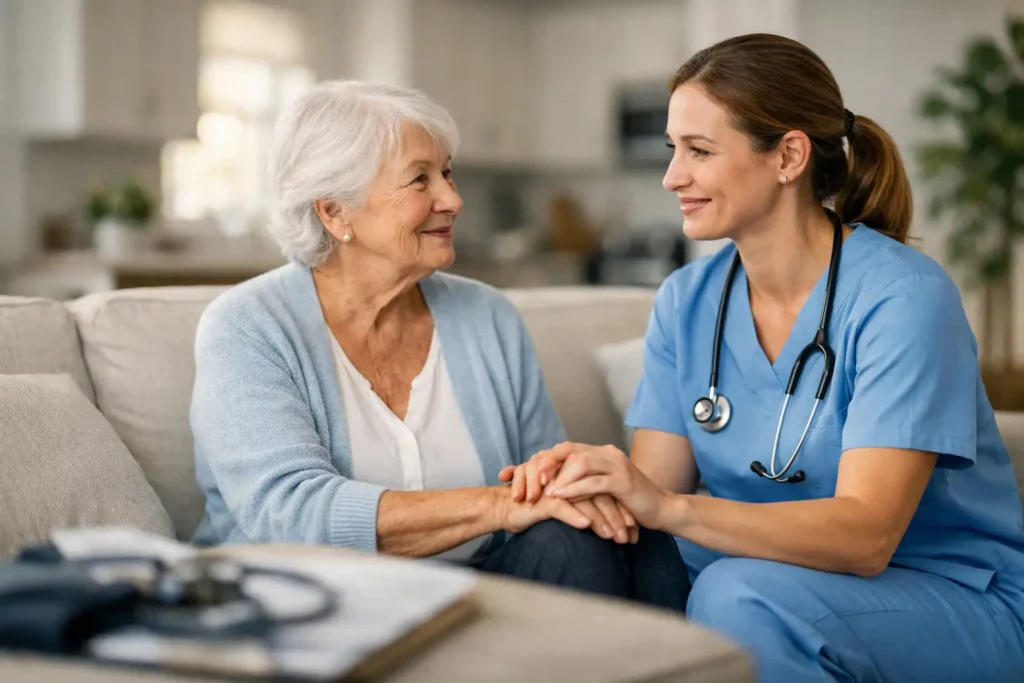
A hospital discharge can leave families with a stack of instructions and one pressing question: what happens once your loved one is back in the living room instead of a hospital room? That is often when skilled nursing care at home becomes more than a convenience. It becomes the bridge between a medical crisis and a safer, steadier recovery.
For many families, the hardest part is not caring. It is figuring out what kind of care is actually needed. A parent may seem too medically complex for basic help, but not sick enough to remain in a facility. A spouse may need wound care, medication management, or monitoring after surgery, while also needing encouragement, education, and a plan that makes daily life manageable again. You’re in the right place to sort through that.
What skilled nursing care at home actually means
Skilled nursing care at home refers to medical care provided by licensed nurses in a home setting under a physician-directed plan. This is different from non-medical home care, which may help with bathing, meals, transportation, or companionship but does not include clinical treatment.
A skilled nurse brings medical judgment into the home. That can include assessing symptoms, managing medications, checking vital signs, caring for wounds, monitoring chronic conditions, teaching family caregivers, and communicating with physicians about changes that need attention. The goal is not simply to complete tasks. It is to support recovery, reduce risk, and help people remain safely at home whenever possible.
That distinction matters because families are often told their loved one needs “home care” without much clarification. In practice, there are different levels of support. Some people need help getting dressed and preparing lunch. Others need a nurse who can recognize early signs of infection, evaluate swelling, reinforce discharge instructions, or respond when recovery is not going as planned.
When skilled nursing care at home is the right fit
This kind of care is often appropriate after a hospitalization, surgery, or serious illness. It can also be the right choice for someone living with a chronic condition that requires close monitoring.
A few common examples include a patient returning home after joint replacement, someone healing from a wound that requires dressing changes, an older adult with heart failure who needs symptom monitoring, or a person with diabetes whose medication routine has become difficult to manage safely. Families coping with COPD, stroke recovery, infections, or complex medication regimens may also benefit from nursing support at home.
The best indicator is not just diagnosis. It is whether the person has ongoing medical needs that require licensed clinical oversight. If there is concern about complications, confusion about treatment instructions, or a pattern of setbacks after previous discharges, skilled nursing can provide a level of structure and professional observation that makes a real difference.
At the same time, not every person at home needs a nurse. Some only need personal care or household support. Others need both. That is where a coordinated approach matters. Medical needs and daily living needs do not exist in separate boxes, even if the healthcare system sometimes treats them that way.
What services a skilled nurse may provide at home
The exact care plan depends on the physician’s orders and the patient’s condition, but skilled nursing services commonly include wound care, medication teaching and management, disease education, pain assessment, catheter care, monitoring after surgery, and ongoing evaluation of symptoms and safety.
Nurses also play a key role in catching subtle changes early. A slight increase in shortness of breath, new confusion, reduced appetite, or swelling in the legs may not seem urgent to a tired family caregiver. To a trained nurse, those details can signal a developing problem that deserves prompt follow-up.
That clinical eye is one of the biggest benefits of in-home nursing. It helps families move from reacting to crises to managing health more proactively. It also gives patients the comfort of receiving care in familiar surroundings, which can support confidence, routine, and emotional well-being.
Why home-based nursing can be easier on patients and families
Receiving skilled care at home often allows people to heal in the place where they feel most like themselves. They sleep in their own bed, eat familiar meals, and stay connected to the people and routines that matter to them. For older adults especially, that can reduce stress and help preserve a sense of independence.
For families, the benefit is often clarity. Instead of trying to decode discharge papers alone, they have a professional who can explain what to watch for, answer practical questions, and coordinate concerns with the broader care team. That kind of guidance can ease a great deal of anxiety.
There is also a safety advantage. Transitions are when many things go wrong – medications change, follow-up appointments are missed, and warning signs are easy to overlook. Skilled nursing support can help close those gaps. It does not eliminate every risk, but it can reduce the chance that small issues become larger setbacks.
The value of coordinated care, not isolated services
One of the biggest frustrations families face is fragmentation. A loved one may need nursing, therapy, help with bathing, transportation to appointments, and someone to advocate when instructions from different providers do not line up. If those pieces are handled separately, families often end up doing the coordination themselves.
That is exhausting, and it can lead to missed details.
A more effective model looks at the whole person. Clinical care, functional support, emotional well-being, and family education all affect outcomes at home. A nurse may be managing wound care, but if the patient is also struggling to prepare meals, get safely to the bathroom, or remember instructions, those issues can slow recovery just as much as the wound itself.
This is why integrated support matters. When skilled nursing is aligned with non-medical care, therapy, and care coordination, families get a clearer plan and patients get care that reflects real life rather than a narrow checklist.
Questions to ask before starting skilled nursing care at home
If you are comparing options, ask who will oversee the plan of care, how the nurse communicates with the physician, and what happens if the patient’s condition changes. You should also ask how the agency coordinates with therapists, aides, and family caregivers if more than one kind of support is needed.
Another useful question is whether the care plan is customized or standardized. Two patients with the same diagnosis may need very different support at home. One may be independent except for wound care. Another may need nursing plus hands-on help with daily activities and close caregiver teaching.
It is also reasonable to ask how progress is measured. Good home-based care is not just about showing up for visits. It is about helping the patient improve, stabilizing health, preventing avoidable complications, and making the home situation safer and more sustainable.
What families in Northern Nevada should keep in mind
In communities across Northern Nevada, families are often balancing care decisions with work, distance, weather, and limited time. A daughter in Reno may be helping a parent in Carson City. A spouse in Sparks may be trying to manage recovery after surgery without nearby relatives. In those moments, local and coordinated support matters.
Comprehensive Home Health Solutions is built around that reality. With physician-led oversight, board-certified patient advocacy, and integrated in-home services, the focus is not simply on sending someone out for a visit. It is on understanding what the patient needs medically, what the family can realistically manage, and how to create a plan that supports both safety and dignity.
That kind of support is especially valuable when the answer is not one service or another, but a thoughtful combination of care.
Skilled nursing care at home is not one-size-fits-all
Some patients need short-term nursing after an illness or surgery and then transition out of care. Others need longer support because they are managing complex chronic conditions. Some families want occasional clinical oversight for peace of mind. Others are facing daily medical challenges that require a more active plan.
That is why the right next step usually starts with a conversation, not a generic package. The question is not whether home care sounds helpful in theory. The question is what will make this specific person safer, stronger, and better supported at home.
When families understand that, care decisions become less overwhelming. And when the right clinical support is in place, home can remain what it should be – a place of healing, comfort, and dignity.