
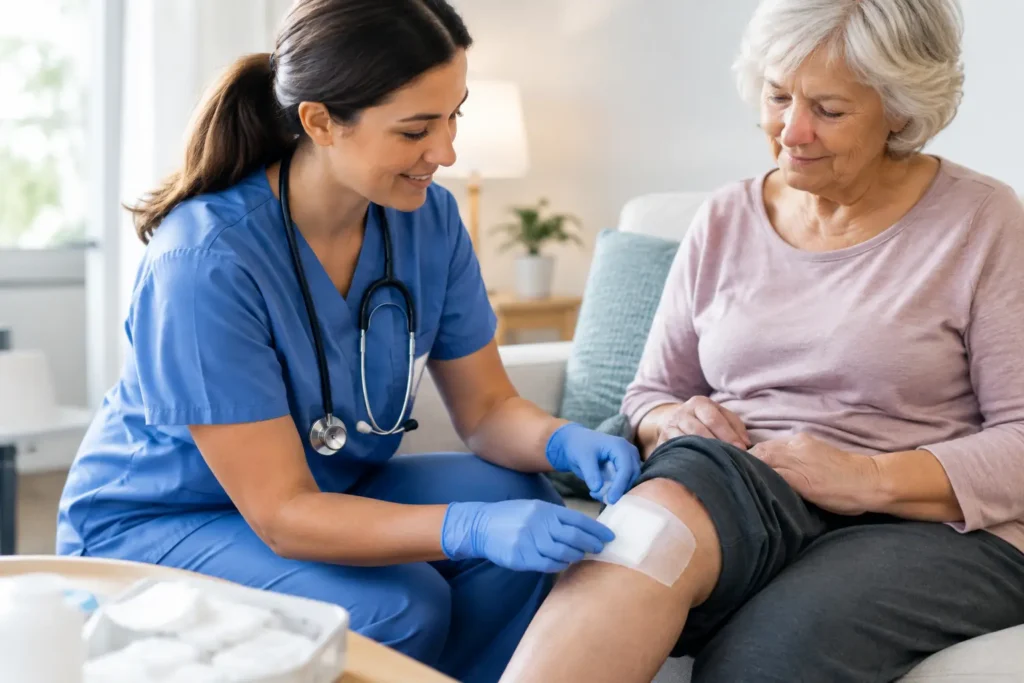
A small wound can become a big worry quickly when it is not healing as expected. For a parent returning home after surgery, a spouse living with diabetes, or someone with limited mobility, wound care is about far more than changing a bandage. It is about preventing infection, protecting comfort, preserving independence, and knowing when clinical help is needed.
Families should not have to make those decisions alone. A wound may look different from one day to the next, and the right care depends on its cause, location, depth, drainage, medical history, circulation, nutrition, and ability to move safely at home. Clear guidance and consistent observation can make a meaningful difference.
What Safe Wound Care at Home Involves
Wounds are not all alike. A surgical incision, a pressure injury, a skin tear, a diabetic foot ulcer, and a venous leg ulcer each heal differently and carry different risks. Covering a wound with the nearest adhesive bandage may be enough for a minor cut, but it is not a substitute for a clinician-directed plan when a wound is complex, slow to heal, or connected to an underlying health condition.
Safe care starts with the plan provided by the physician or qualified clinician. That plan may address how and when to clean the wound, the type of dressing to use, whether the area should stay dry, activity restrictions, pain management, and follow-up appointments. Families should avoid adding creams, antiseptics, or home remedies unless the care team has approved them. Some products can irritate healthy tissue or interfere with the dressing and healing process.
Hand hygiene matters every time. Anyone helping with a dressing change should wash their hands thoroughly before and after care, use clean supplies, and dispose of used dressings as directed. It also helps to keep a simple record of dressing changes, drainage, odor, pain, and changes in the skin around the wound. These details give the medical team a clearer picture of whether healing is progressing.
When a Wound Needs More Than Family Support
Family caregivers often do an extraordinary amount, especially after a hospital stay. But there is a difference between providing day-to-day support and managing a wound that requires clinical assessment. Skilled nursing may be appropriate when a physician orders wound treatment, when a wound needs specialized dressings, or when a person cannot safely perform the required care independently.
A home health nurse can assess the wound as directed by the physician, provide ordered treatments, teach family members how to support the care plan, and communicate changes to the broader clinical team. This can be particularly valuable after surgery, when a loved one has multiple chronic conditions, or when transportation to frequent appointments is difficult.
The benefit is not simply convenience. Wound healing is often affected by factors that are easy to miss in a busy household. Swelling, dehydration, poor appetite, blood sugar changes, limited mobility, medication side effects, and pressure from sitting or lying in one position can all slow progress. A coordinated team can look beyond the dressing itself and identify barriers that may need attention.
For example, a person with a pressure injury may need nursing care alongside assistance with repositioning, bathing, meals, and transfers. Someone recovering from surgery may need help managing fatigue and mobility while a nurse monitors the incision. When medical care and personal support work together, the plan is more realistic for the person living with it.
Signs That Call for Prompt Medical Attention
Not every change means there is an emergency, but families should take changes seriously. Contact the prescribing clinician promptly if the wound is becoming more painful, appears larger or deeper, or is not improving according to the expected timeline. Seek guidance as soon as possible if you notice:
- Increasing redness, warmth, swelling, or tenderness around the wound
- New or worsening drainage, especially if it is thick, cloudy, bloody, or foul-smelling
- A fever, chills, unusual weakness, confusion, or a sudden decline in overall condition
- Darkening skin, black tissue, pale or cool skin near the wound, or numbness in the area
- A surgical incision that opens, separates, or begins draining unexpectedly
Call 911 or seek emergency care for severe bleeding that does not stop with firm pressure, signs of a severe allergic reaction, chest pain, trouble breathing, fainting, or sudden confusion. If you are unsure whether a symptom is urgent, it is safer to call the physician’s office, on-call provider, or emergency service for direction.
The Daily Habits That Support Healing
A dressing is only one piece of healing. The body needs adequate protein, fluids, calories, vitamins, and minerals to repair tissue. Appetite often declines after illness or surgery, so small, nourishing meals and hydration may need more attention than usual. For people with diabetes, following the care plan for blood sugar management is especially important, since high blood sugar can delay healing and raise infection risk.
Pressure relief is also essential for anyone spending long periods in bed or in a chair. The exact schedule and equipment should come from the clinical team, because it depends on the person’s condition, mobility, skin health, and tolerance. Families can help by noticing whether heels, hips, tailbone, elbows, or other bony areas are becoming red or sore, then reporting changes early.
Smoking can reduce blood flow and make healing harder. So can unmanaged swelling in the legs, poor-fitting shoes, or repeated friction from transfers and mobility devices. These are not reasons for blame. They are practical issues a care team can help address, often with small adjustments that make daily life safer and more comfortable.
Why Coordination Matters in Wound Care
A wound rarely exists in isolation. The person may also be managing heart disease, diabetes, arthritis, dementia, medication changes, or the emotional strain of losing independence. Fragmented care can leave families trying to relay the same information to several different providers while worrying that something important is being missed.
An integrated approach brings the right support around the individual. Physician-directed home health can provide skilled nursing and therapy when ordered and appropriate. Non-medical caregivers can help with personal care, meals, mobility, and household routines that support the plan. Patient advocacy and care coordination can help families understand recommendations, prepare for appointments, and communicate across providers.
At Comprehensive Home Health Solutions, care begins by listening to the full situation, not just the diagnosis. The goal is to understand what the wound requires medically and what the person needs functionally and emotionally to follow the plan at home. That may mean helping a family create a safer routine after discharge, coordinating with the physician, or identifying when a higher level of care is needed.
Questions Families Can Ask Before Leaving the Hospital or Clinic
Before a loved one comes home with a wound, ask the care team to explain the plan in plain language. You should know who is responsible for dressing changes, how often the dressing should be changed, what supplies are needed, and who to call after hours. It is also reasonable to ask what normal healing should look like over the next several days and which changes should prompt a call.
If a family caregiver will be assisting, ask for a demonstration and the chance to repeat the steps back. Written instructions are helpful, but hands-on teaching can prevent uncertainty later. Be honest about what is realistic at home. If the wound is difficult to reach, if the person resists care because of pain or memory loss, or if caregivers cannot manage the schedule safely, say so before discharge. Those details help the team arrange appropriate support.
Healing can take patience, particularly for wounds affected by age, circulation problems, diabetes, or limited mobility. The right next step is not always more complicated care. Sometimes it is a clear clinical plan, a trained nurse’s observation, and enough support at home for your loved one to rest, eat well, move safely, and feel like themselves while healing.