
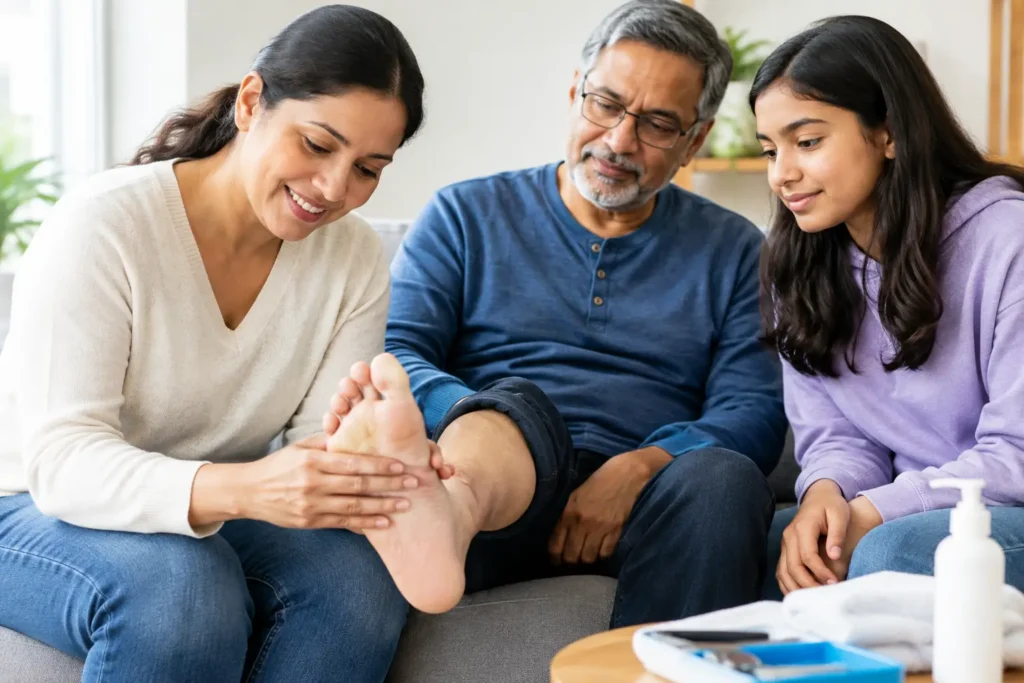
A small blister can become a serious medical concern faster than many families expect. Diabetes can reduce feeling in the feet, slow healing, and affect circulation, which means an injury may not hurt enough to get noticed. This guide to diabetes foot care offers a clear, practical routine for helping a loved one stay safe, comfortable, and independent at home.
For an older adult managing diabetes, foot care is not simply about neat toenails or comfortable shoes. It is a daily check on health. When a family caregiver knows what to look for and when to call for help, many problems can be addressed before they lead to infection, hospitalization, or a loss of mobility.
Why diabetes changes foot health
High blood sugar over time can damage nerves, a condition called neuropathy. A person may feel tingling, burning, numbness, or no pain at all. That lack of feeling can make it easy to miss a pebble in a shoe, a cut from a toenail, or a pressure spot caused by a poorly fitting slipper.
Diabetes may also reduce blood flow to the feet. With less circulation, the body has a harder time bringing oxygen and healing resources to a wound. Skin can become dry and fragile, and a small crack or sore can take longer to close. Vision changes, arthritis, balance concerns, memory loss, or difficulty bending can add another layer of risk.
This does not mean every person with diabetes will develop a foot problem. Risk varies based on blood sugar management, circulation, nerve sensation, foot shape, past ulcers, kidney disease, smoking history, and overall mobility. Still, a consistent routine is one of the most useful safeguards a family can put in place.
The daily diabetes foot care routine
The best routine is the one a loved one can realistically follow every day. Choose a regular time, such as after a shower or before bed, and make it part of the normal schedule. If your family member cannot safely see or reach both feet, a caregiver can help with the inspection while preserving privacy and dignity.
Start by looking at the tops, soles, heels, sides, and spaces between the toes. Use good lighting and a hand mirror for the bottoms of the feet, or ask someone for help. Look for changes rather than waiting for a painful symptom. Redness, swelling, cracks, peeling skin, blisters, calluses, cuts, bruising, drainage, and changes in color all deserve attention.
Wash feet in lukewarm water with mild soap, then dry them carefully, especially between the toes. Because neuropathy can make it difficult to judge temperature, test the water with a hand or elbow first. Avoid soaking feet for long periods, which can dry and weaken the skin.
A fragrance-free moisturizer can help prevent cracking, particularly on the heels and soles. Keep lotion out from between the toes, where extra moisture can encourage fungal growth. If skin is persistently dry, thickened, itchy, or cracked, bring it up with the primary care provider or foot specialist rather than experimenting with harsh products.
Toenails need care, but this is an area where good intentions can cause injury. Nails should generally be trimmed straight across and filed gently to smooth sharp corners. Never cut deeply into the sides of a nail or try to remove an ingrown nail at home. For someone with numbness, poor circulation, thick nails, limited vision, or a history of foot wounds, professional foot care is often the safer choice.
Shoes are part of prevention
Shoes should protect the whole foot without rubbing, squeezing, or sliding. Before putting on shoes, check inside for rough seams, loose inserts, or objects that may not be felt during the day. Clean, dry socks without tight elastic bands can reduce friction and help keep skin comfortable.
Encourage your loved one to wear shoes or supportive slippers indoors as well as outdoors. Walking barefoot, even in a familiar home, raises the risk of cuts, burns, and puncture wounds. This is especially relevant in Northern Nevada, where dry skin, hot pavement, cold weather, and uneven outdoor surfaces can all create avoidable foot hazards.
A shoe that once fit well may no longer be right if swelling, weight changes, hammertoes, bunions, or arthritis have changed the foot. If there are recurring pressure spots or calluses, ask the medical team whether diabetic shoes, custom inserts, or a podiatry evaluation would help. The right option depends on the person’s circulation, sensation, activity level, and foot structure.
Warning signs that should not wait
Do not assume a foot problem will resolve on its own because it looks minor. Call the person’s clinician promptly for a new sore, blister, cut, crack, or area of redness, particularly if it does not improve quickly. Early guidance can prevent a small issue from becoming much harder to treat.
Seek urgent medical attention for these signs:
- A wound that is deep, draining, foul-smelling, or surrounded by spreading redness
- Increasing warmth, swelling, severe pain, or pain that is new in a numb foot
- Black, blue, pale, or unusually cold skin on a toe or foot
- Fever, chills, confusion, or a general feeling of illness along with a foot wound
- A red, swollen, or hot foot that changes shape, even when there is little pain
That last sign can be associated with Charcot foot, a serious condition in which weakened bones and joints can be damaged without the person realizing it. Quick evaluation matters. Until a clinician advises otherwise, avoid having the person walk on a newly swollen, hot, or injured foot.
Never use over-the-counter corn removers, medicated pads, razors, or sharp tools on diabetic feet unless a qualified clinician has specifically instructed you to do so. These products can burn or cut skin, particularly when sensation is reduced.
Make blood sugar and foot care part of the same plan
Foot care works best alongside the larger diabetes plan. Taking medications as prescribed, following nutrition guidance, staying as active as is safely appropriate, attending regular appointments, and monitoring blood sugar when directed all support healing and circulation.
Families can also make appointments more productive by keeping brief notes. Record when a skin change first appeared, whether it is growing, whether there is drainage or odor, and what footwear was used. A photo taken in consistent lighting may help a clinician assess whether a wound is changing, but it should never replace an in-person evaluation when warning signs are present.
If a loved one has had a previous ulcer, amputation, or circulation problem, ask their provider how often they need professional foot exams. Many people need at least an annual comprehensive exam, while those at higher risk may need more frequent checks. This is not an area for a one-size-fits-all schedule.
When care at home needs more support
Families often recognize the routine but struggle to carry it out consistently. A spouse may be managing their own health concerns. An adult child may live in Reno while a parent in Carson City or Gardnerville needs daily help. After a hospitalization, a loved one may be too weak or unsteady to safely bathe, inspect their feet, shop for appropriate shoes, or get to follow-up visits.
That is where coordinated in-home support can make a meaningful difference. Non-medical caregivers can assist with safe routines, mobility, personal care, meal support, and transportation. When there is a physician-directed need, skilled nursing can assess wounds, monitor changes, reinforce the care plan, and communicate with the prescribing clinician. Therapy may help address balance, strength, and safer movement at home.
At Comprehensive Home Health Solutions, our integrated approach helps families understand which kind of support fits the situation instead of trying to piece together disconnected services. We listen first, then help organize a plan around the person’s medical needs, daily abilities, home environment, and family support.
A daily look at your loved one’s feet may feel like one more task on a long caregiving list. It is also a quiet way to protect mobility, comfort, and independence – and a reason to ask for help early when something does not look right.